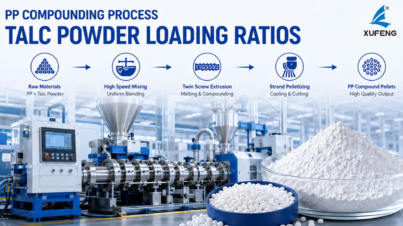
The amount of talc powder added to polypropylene (PP) depends on the desired balance between mechanical performance, processing behavior, and cost control. In most PP modification applications, talc loading typically ranges from 10% to 40%. For ...
What Mesh Talc Is Best for PP?
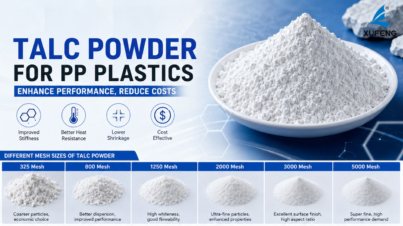
The best mesh size of talc powder for polypropylene (PP) depends on the specific application and performance requirements. Generally, finer talc powder provides better dispersion, smoother surface finish, and improved mechanical properties in PP ...
Is Talc Powder Safe for Plastics?
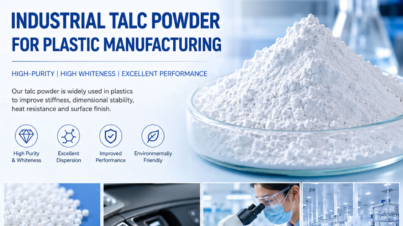
Talc powder is widely considered safe for use in plastics when industrial-grade, high-purity talc is properly selected and processed. In the plastics industry, talc is commonly used as a functional mineral filler in polypropylene (PP), polyethyle ...
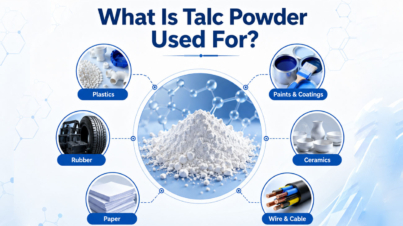
What Is Talc Powder Used For?
Talc powder is a naturally occurring mineral mainly composed of hydrated magnesium silicate. Due to its excellent lubricity, high whiteness, chemical stability, and plate-like particle structure, talc powder is widely used as a functional filler ...
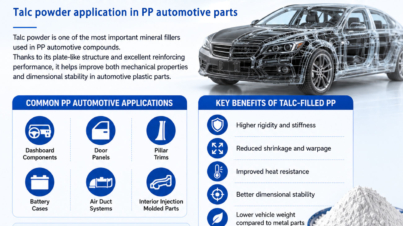
Talc powder application in PP automotive parts
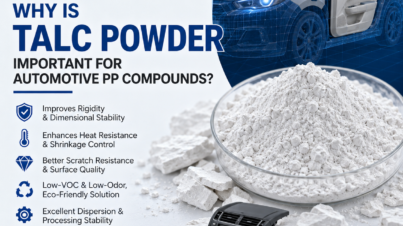
Talc powder is one of the most important mineral fillers used in PP automotive compounds. Thanks to its plate-like structure and excellent reinforcing performance, it helps improve both mechanical properties and dimensional stability in automotive pl ...
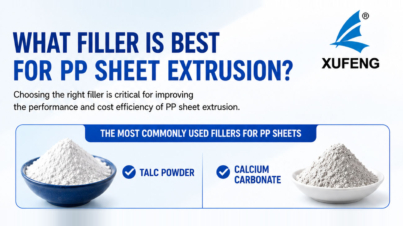
What filler is best for PP sheet extrusion?
Choosing the right filler is critical for improving the performance and cost efficiency of PP sheet extrusion. The most commonly used fillers for PP sheets are: ✔ Talc Powder ✔ Calcium Carbonate Why choose talc powder for PP sheet e ...
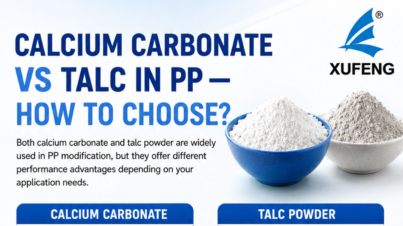
Calcium carbonate vs talc in PP — how to choose?
Both calcium carbonate and talc powder are widely used in PP modification, but they offer different performance advantages depending on your application needs. ✔ Calcium Carbonate: • Lower raw material cost • Good for high-filling applicati ...
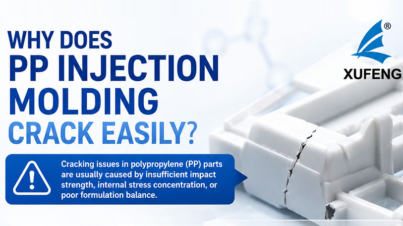
Why does PP injection molding crack easily?
In polypropylene (PP) injection molding, cracking issues are usually caused by insufficient impact strength, internal stress concentration, or poor formulation balance—especially when high filler content or improper mineral selection is used. Comm ...
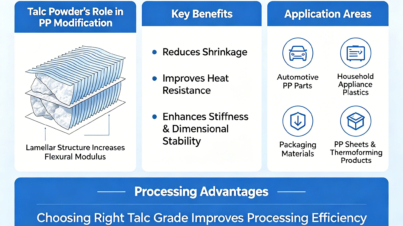
Why does talc powder improve the rigidity of PP plastic?
In PP modification, talc powder is one of the most effective mineral fillers for enhancing stiffness and dimensional stability. Its unique lamellar structure helps increase flexural modulus, reduce shrinkage, and improve heat resistance in PP injecti ...
What plastics are suitable for 1250 mesh talc powder?
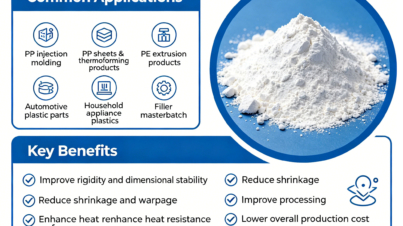
1250 mesh talc powder is widely used in plastic modification due to its balanced particle size, excellent dispersion, and cost-performance advantages. Common applications include: ✔ PP injection molding ✔ PP sheets & thermoformin ...
Why does talc powder sometimes cause brittleness in plastic products?
Brittleness usually occurs when talc powder is improperly selected or poorly dispersed in the polymer matrix. Excessive loading, large particle size, or insufficient surface treatment can disrupt polymer chain mobility, leading to reduced impact resi ...
What role does talc powder play in polypropylene (PP) and polyethylene (PE) modification?
In PP and PE systems, talc powder acts as a reinforcing filler that significantly improves rigidity, heat deflection temperature, and dimensional stability. It also reduces shrinkage and warpage in injection-molded parts, making it essential for auto ...
How to choose the right industrial talc powder for different applications?
Selecting the right talc powder depends on particle size, aspect ratio, purity, and application system. For plastic modification, finer mesh sizes improve dispersion and mechanical reinforcement, while higher aspect ratio grades enhance stiffness and ...
What is industrial talc powder and why is it widely used in industry?
Industrial talc powder is a naturally occurring magnesium silicate mineral with a layered structure, offering excellent chemical stability, hydrophobicity, and reinforcement performance. In industrial applications, it is mainly used as a functional f ...
Industrial Talc Powder FAQ – Applications, Selection, Performance & Solutions
Industrial talc powder is widely used in plastics, coatings, rubber, paper, and masterbatch industries due to its lamellar structure, chemical stability, and cost optimization capability. As a manufacturer of industrial talc powder, calcium carbonate ...
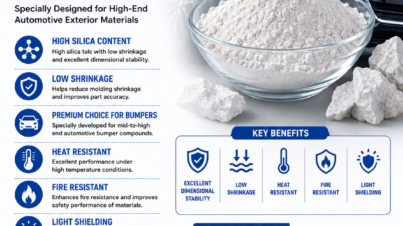
Looking for a reliable talc solution for high-end automotive bumper compounds?
BHS-503 Talc Powder is specially developed for automotive exterior materials. With high silica content, low shrinkage, heat resistance, fire resistance, and excellent dimensional stability, it helps improve both performance and processing consistency ...
How Does Kaolin Filler Affect Processing and Final Product Performance?
Kaolin filler plays a significant role in both processing behavior and final product performance across various industries. During processing, its fine particle size and controlled particle distribution help improve melt flow stability in plastics an ...
What Are the Key Advantages of Kaolin Filler Compared to Other Mineral Fillers?
Kaolin filler offers several distinct advantages compared to commonly used mineral fillers such as calcium carbonate, talc, and silica. One of its most important benefits is excellent thermal stability, allowing kaolin-filled materials to maintain pe ...
What Is Kaolin Filler and What Is It Commonly Used For?
Kaolin filler, also known as kaolin clay or china clay, is a naturally occurring hydrated aluminum silicate widely used as a functional mineral filler in many industrial applications. Due to its fine particle size, stable chemical structure, and high ...
Plate-Like Talc Powder (Lamellar Talc)
Product Overview Plate-like talc powder, also known as lamellar talc, is a high-performance industrial mineral characterized by its thin, layered, plate-shaped particle structure. Unlike conventional talc powders that primarily function as inert fil ...
Talc Powder in EVA Footwear Materials
Q1: What is the function of talc powder in EVA footwear? Answer:Talc powder acts as a reinforcing inorganic filler in EVA footwear. It improves tensile strength, tear resistance, abrasion resistance, processing stability, and helps reduce material c ...
How Do You Choose the Right Talc for Powder Coatings?
Choosing the correct talc grade is critical to achieving consistent quality in powder coatings. Not all talc performs the same, and selection should be based on both formulation requirements and processing conditions. The first key factor is particl ...
Is Talc Better Than Calcium Carbonate in Powder Coatings?
Whether talc is better than calcium carbonate in powder coatings depends on the specific performance requirements of the formulation. Both minerals are widely used, but they serve different technical purposes. Talc is known for its lamellar particle ...
What Does Talc Do in Powder Coatings?
Talc plays a multifunctional role in powder coating formulations, acting as both a performance-enhancing filler and a processing aid. Unlike liquid coatings, powder coatings rely entirely on solid-state interactions, making mineral fillers like talc ...
How Is Talc Powder Used in Paper Manufacturing?
Talc powder is widely used in the paper industry, particularly in printing paper, packaging paper, and specialty papers. A common PAA question is how talc functions in paper production. One of the main roles of talc is pitch control. During paper ma ...
What Is the Role of Talc Powder in Ceramic Products?
In the ceramics industry, talc powder is commonly used in tiles, sanitary ware, tableware, and technical ceramics. One of the most frequently asked questions is what role talc plays in ceramic formulations. Talc acts as a fluxing agent, meaning it h ...
Why Is Talc Powder Added to Rubber Compounds?
Talc powder is widely used in rubber compounding for tires, hoses, seals, and industrial rubber products. A common question is why rubber manufacturers rely on talc instead of other mineral fillers. One key reason is talc’s ability to improve proces ...
What Does Talc Powder Do in Paints and Coatings?
What Does Talc Powder Do in Paints and Coatings? Talc powder plays a multifunctional role in paints and coatings, making it a popular choice for architectural, industrial, and protective coating formulations. One of the most common PAA questions is ...
Why Is Talc Powder Widely Used in Plastic Products?
Talc powder is one of the most commonly used mineral fillers in the plastics industry, especially in polypropylene (PP), polyethylene (PE), and engineering plastics. A frequently asked question by manufacturers is why talc is preferred over other fil ...
High-Conversion FAQ – Talc Powder
1. What mesh size of talc powder should I choose for my application? The ideal talc powder mesh size depends on your industry and performance requirements. Plastics & masterbatch: 600–1250 mesh (good stiffness, dispersion, and cost bala ...