
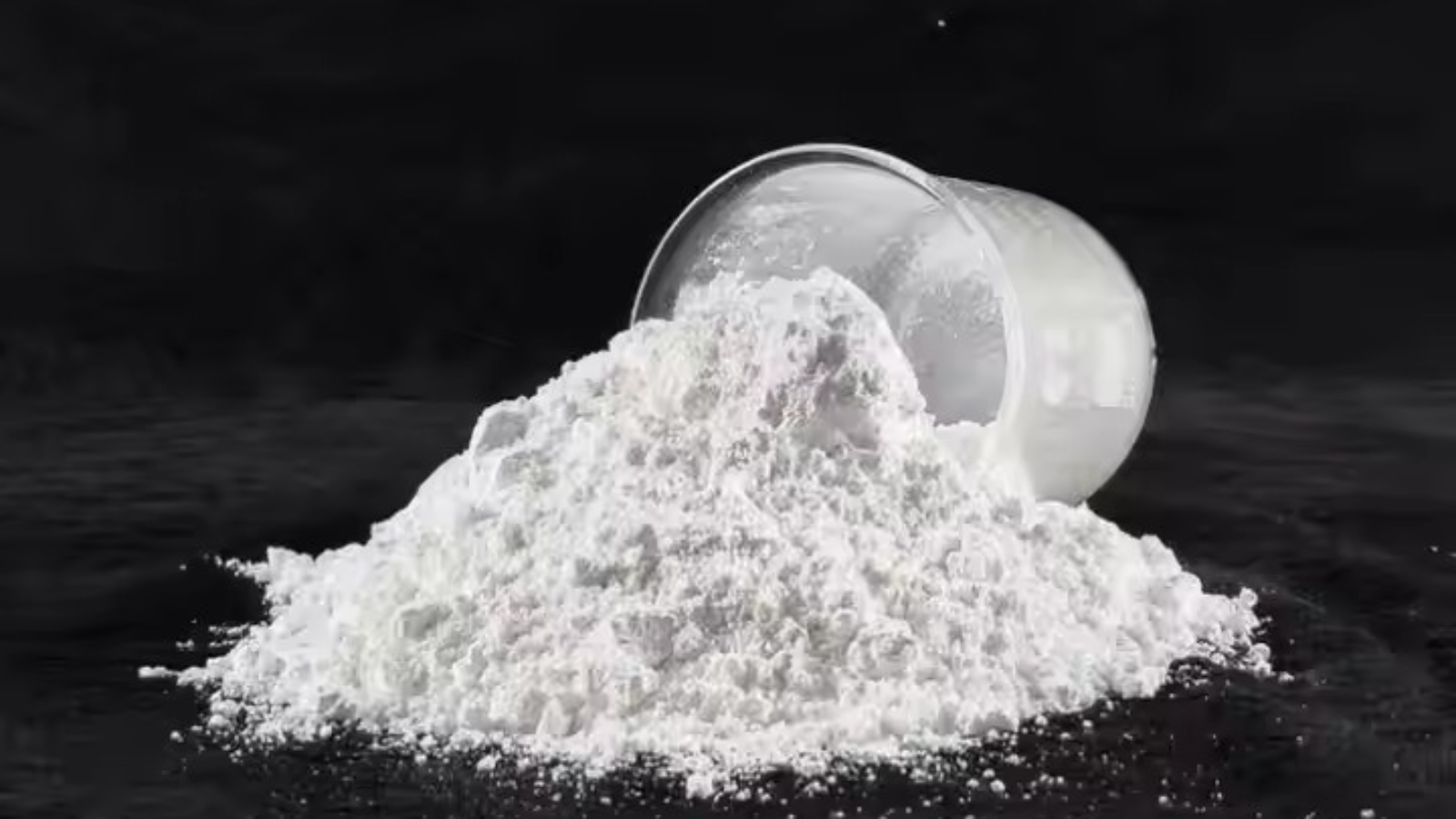
In the field of plastic modification, talc powder is one of the most widely used inorganic fillers, second only to calcium carbonate. It is extensively applied in resin systems such as PP, PE, ABS, and PA. As performance requirements continue to rise, talc powder has evolved from a simple cost-reduction filler into a functional modification additive, playing a critical role in reinforcement, cost optimization, and structural improvement.
1. Platelet Structure Determines Core Performance
The most distinctive feature of talc powder is its lamellar (plate-like) crystal structure, which enables a “two-dimensional reinforcement” effect in plastics.
Compared with spherical calcium carbonate or needle-like wollastonite, talc offers a higher aspect ratio, resulting in:
- Increased stiffness and flexural modulus
- Improved dimensional stability
- Enhanced heat resistance and higher HDT
This is why talc is widely used in automotive interior parts and home appliance housings.
2. Significant Cost Reduction with High Filling Capability
Amid fluctuating raw material prices, talc’s high loading capacity and cost efficiency are key advantages:
- Partial replacement of resin reduces material cost
- Maintains mechanical properties even at high loading levels
- Reduces shrinkage and warpage
Unlike purely cost-driven fillers, talc achieves cost reduction without sacrificing performance.
3. Improved Processing Performance
Talc has natural lubricity and low hardness (Mohs hardness ≈ 1), which benefits processing:
- Enhances melt flow and reduces energy consumption
- Improves mold release behavior
- Provides better surface finish
These properties are particularly valuable in high-filled masterbatch and extrusion systems.
4. Nucleating Effect Enhances Crystallization
Ultrafine talc (especially below 1 μm) can act as a nucleating agent in semi-crystalline plastics such as PP and PET:
- Accelerates crystallization rate
- Shortens molding cycle
- Improves stiffness while balancing transparency
This makes talc ideal for high-speed injection molding and thin-wall products.
5. Barrier and Thermal Insulation Functions
Due to its layered structure, talc forms a barrier network within plastics:
- Improves gas barrier properties (films)
- Enhances infrared blocking (agricultural films)
- Provides better thermal insulation
6. Electrical Insulation and Chemical Stability
Talc is chemically inert and offers:
- Excellent electrical insulation
- Resistance to acids and alkalis
- Improved aging resistance (especially in high-purity grades)
7. Expanding Application Fields
Talc powder is widely used in:
- Automotive parts (bumpers, dashboards)
- Home appliances
- Packaging films and woven bags
- Pipes and construction materials
In PP modification systems, talc has become a standard filler.
8. Industrial Practice: Xufeng Powder Advantages
In real-world applications, talc performance depends not only on mineral quality but also on processing technology.
Quanzhou Xufeng Powder Raw Material Co., Ltd. leverages its own mines and large-scale production system to provide:
- High-purity raw materials
- Controlled ultrafine particle size distribution
- Surface modification for better dispersion
- Customized solutions for PP, PE, and masterbatch systems
Xufeng delivers not just raw materials, but application-driven solutions to achieve both cost reduction and performance enhancement.
Conclusion
The core value of talc powder in plastics can be summarized as:
Performance Enhancement + Cost Reduction + Process Optimization + Functional Expansion
With the ongoing trend toward high-filling modification and lightweight materials, talc will continue to play a vital role in the plastics industry.
Add a Comment