
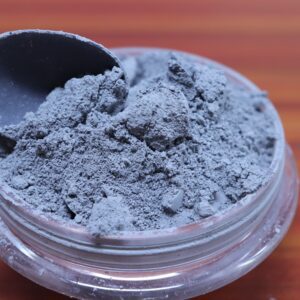
Grey talc powder is a naturally occurring mineral filler widely used in plastics, coatings, rubber, ceramics, and construction materials. It shares the same chemical base as conventional talc—mainly hydrated magnesium silicate—but its natural color and particle structure make it especially suitable for industrial products where color is not the primary requirement. Many manufacturers prefer grey talc because it offers strong performance at a more economical cost.
What Makes Grey Talc Powder Different?
Grey talc is produced from darker talc ore bodies and typically contains slightly higher levels of natural impurities such as iron or carbon minerals. These do not affect performance in most industrial applications but give the powder a grey appearance. Despite the color, grey talc still maintains:
-
Good lamellar (plate-like) structure
-
Excellent lubricity
-
Stable chemical properties
-
High thermal resistance
What Are the Main Industrial Applications of Grey Talc Powder?
1. Plastics and Masterbatch
Grey talc powder is widely used in PP, PE, PVC, and EVA compounds. It improves stiffness, heat resistance, dimensional stability, and impact strength. For dark-colored or hidden structural parts, grey talc offers the best cost–performance ratio.
2. Rubber Products
In tires, seals, and shoe soles, grey talc enhances processability, reduces stickiness during mixing, and improves wear resistance. Its fine particles help achieve smoother surfaces and consistent hardness.
3. Coatings and Building Materials
Grey talc is added to primers, putty, mortar, and waterproof coatings. It improves adhesion, reduces cracking, enhances sanding performance, and provides good covering ability without affecting viscosity.
4. Ceramics and Refractories
Thanks to its heat resistance, grey talc is suitable for ceramic bodies, tiles, and fire-resistant materials. It stabilizes firing shrinkage and strengthens final product density.
Is Grey Talc Powder Safe?
Grey talc used for industrial applications is generally safe when handled with proper dust control. It is chemically inert and does not react with most materials. However, standard industrial safety practices—such as dust masks and ventilation—are recommended.
Why Choose Grey Talc Instead of White Talc?
Manufacturers choose grey talc when:
-
Color is not critical
-
High performance is needed at a lower cost
-
The product requires good mechanical strength and thermal stability
Grey talc balances quality and price, making it ideal for large-volume industrial applications.
