Trusted by global manufacturers for high-performance talc and calcium carbonate. Consistent quality, fast delivery, free samples.
Solves Dispersion and Smoke Issues in Cable Sheathing
🧑💼 Customer Background
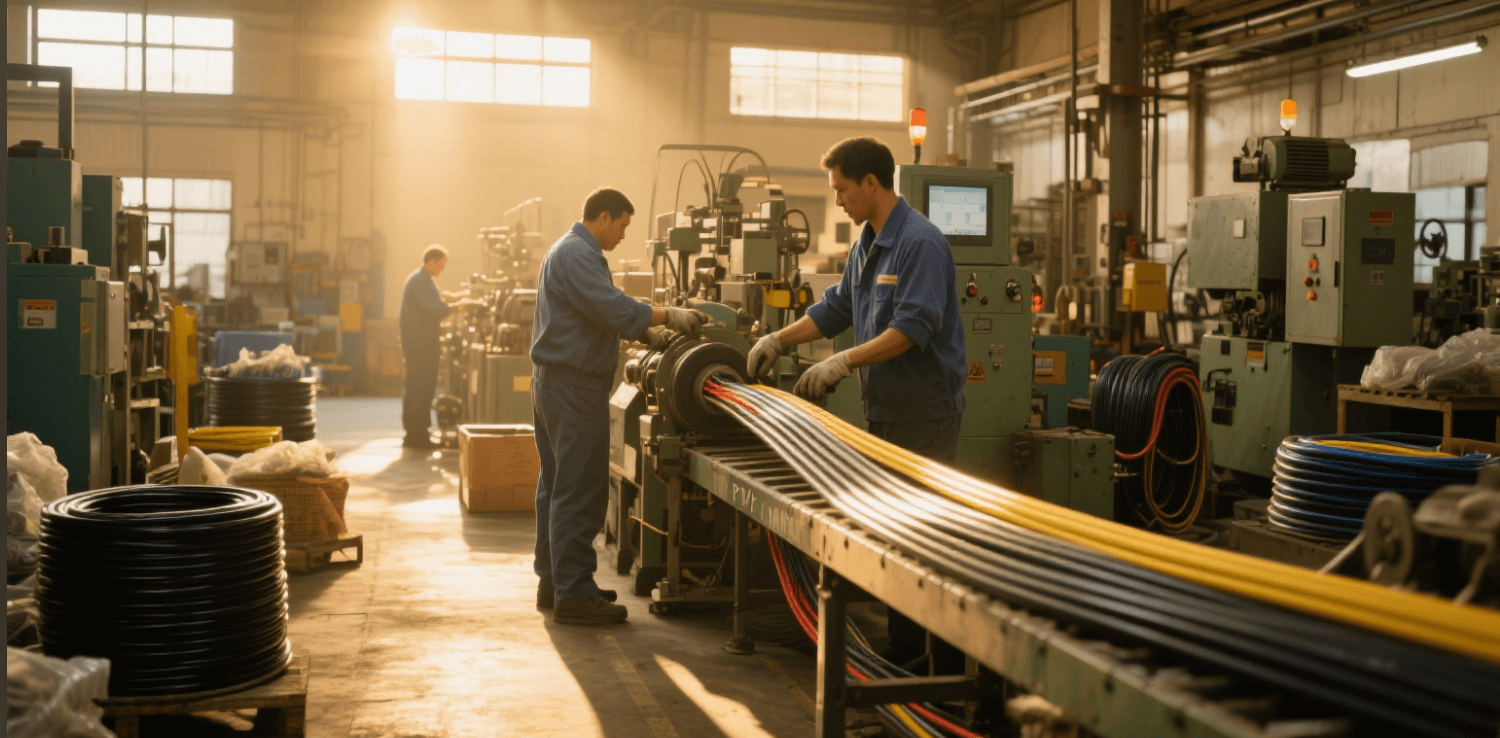
This customer is a manufacturer specializing in low and medium voltage power cables, producing PVC-sheathed cables, flame-retardant wires, and home wiring for the construction, energy, and appliance sectors. Monthly output is around 800 tons.
With stricter safety and environmental regulations, the client needed to improve processability, reduce smoke density during combustion, and enhance long-term aging resistance — all without increasing costs.
❗ Challenges Faced
Their existing PVC + calcium carbonate formulations presented several problems:
Poor talc dispersion, causing surface roughness and appearance defects
Narrow thermal processing window, leading to material burning or bubbling
High smoke density during combustion, causing repeated third-party flame test failures
Aging issues, including brittleness in humid conditions, raising end-user complaints
They had tried generic talc fillers, but inconsistent quality and poor integration with PVC led them to consider dropping mineral fillers altogether in favor of more expensive flame retardants.
🛠️ Xufeng's Solution
After a detailed assessment of their compounding process and extrusion setup, Xufeng recommended BHS-6802, a high-purity, surface-modified talc powder developed specifically for the cable industry, with key advantages:
D90 ~9μm with narrow size distribution, ensuring excellent dispersion in high-speed mixers
High thermal stability and low VOCs, allowing clean processing with no odor or degradation
Plate-like structure and low thermal conductivity, contributing to lower smoke output and enhanced flame retardancy in PVC blends
In addition, Xufeng provided free formulation support, on-site training, and assistance with third-party lab testing for smoke, flame, and aging standards.
📊 Results After Implementation
Following pilot production and testing, the customer saw measurable gains:
✅ Surface smoothness improved by ~35%, with more consistent color and finish
✅ Smoke density reduced by over 40%, passing key flame retardant standards (e.g. IEC 61034)
✅ Processing window widened by +15°C, making extrusion more forgiving
✅ Moisture aging resistance increased by ~28%, reducing return rates
✅ Overall cost savings of 6%–8%, through partial replacement of expensive additives
Customer Testimonial
“We’d tried talc before, but always ended up with too much smoke or brittle jackets. BHS-6802 was different — smoother mixing, stable extrusion, and better color. Their technical support was excellent too. We’ve now fully replaced our previous filler with this one.”
OURresults
Following pilot production and testing, the customer saw measurable gains:
✅ Surface smoothness improved by ~35%, with more consistent color and finish
✅ Smoke density reduced by over 40%, passing key flame retardant standards (e.g. IEC 61034)
✅ Processing window widened by +15°C, making extrusion more forgiving
✅ Moisture aging resistance increased by ~28%, reducing return rates
✅ Overall cost savings of 6%–8%, through partial replacement of expensive additives