
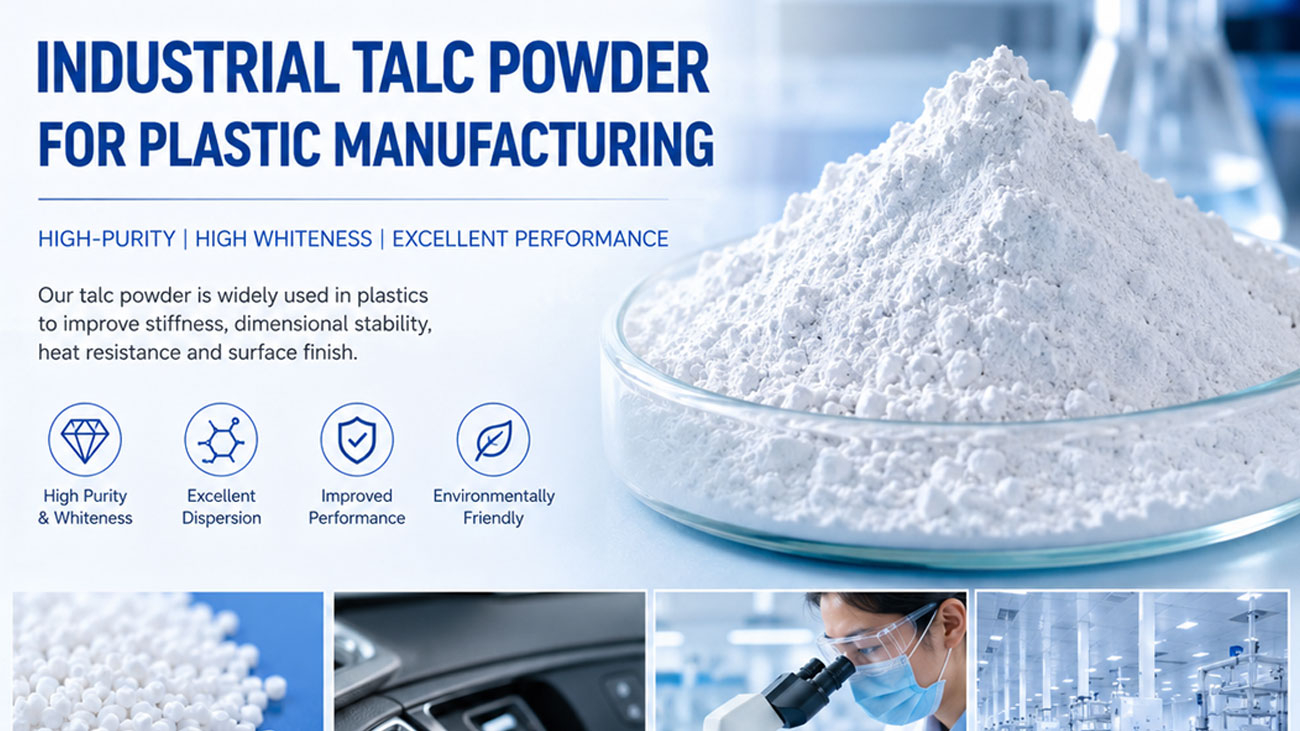
Talc powder is widely considered safe for use in plastics when industrial-grade, high-purity talc is properly selected and processed. In the plastics industry, talc is commonly used as a functional mineral filler in polypropylene (PP), polyethylene (PE), automotive compounds, household appliances, and packaging materials.
High-quality talc powder offers excellent chemical stability, low moisture absorption, and good thermal resistance. These properties help improve stiffness, dimensional stability, and heat resistance without releasing harmful substances during normal processing conditions.
For automotive interior applications, manufacturers often choose low-VOC and low-odor talc grades to meet increasingly strict environmental standards. In food-contact or consumer-related products, talc materials should comply with relevant regulations and purity requirements to ensure safety and consistency.
Another advantage of talc is its natural plate-like structure, which can enhance plastic performance while reducing material costs. Compared with some synthetic additives, talc is a naturally occurring mineral and is widely used globally in engineering plastics and modified compounds.
To ensure safety and product quality, manufacturers should select talc powder with stable particle size distribution, controlled impurities, and reliable supplier certifications.
