
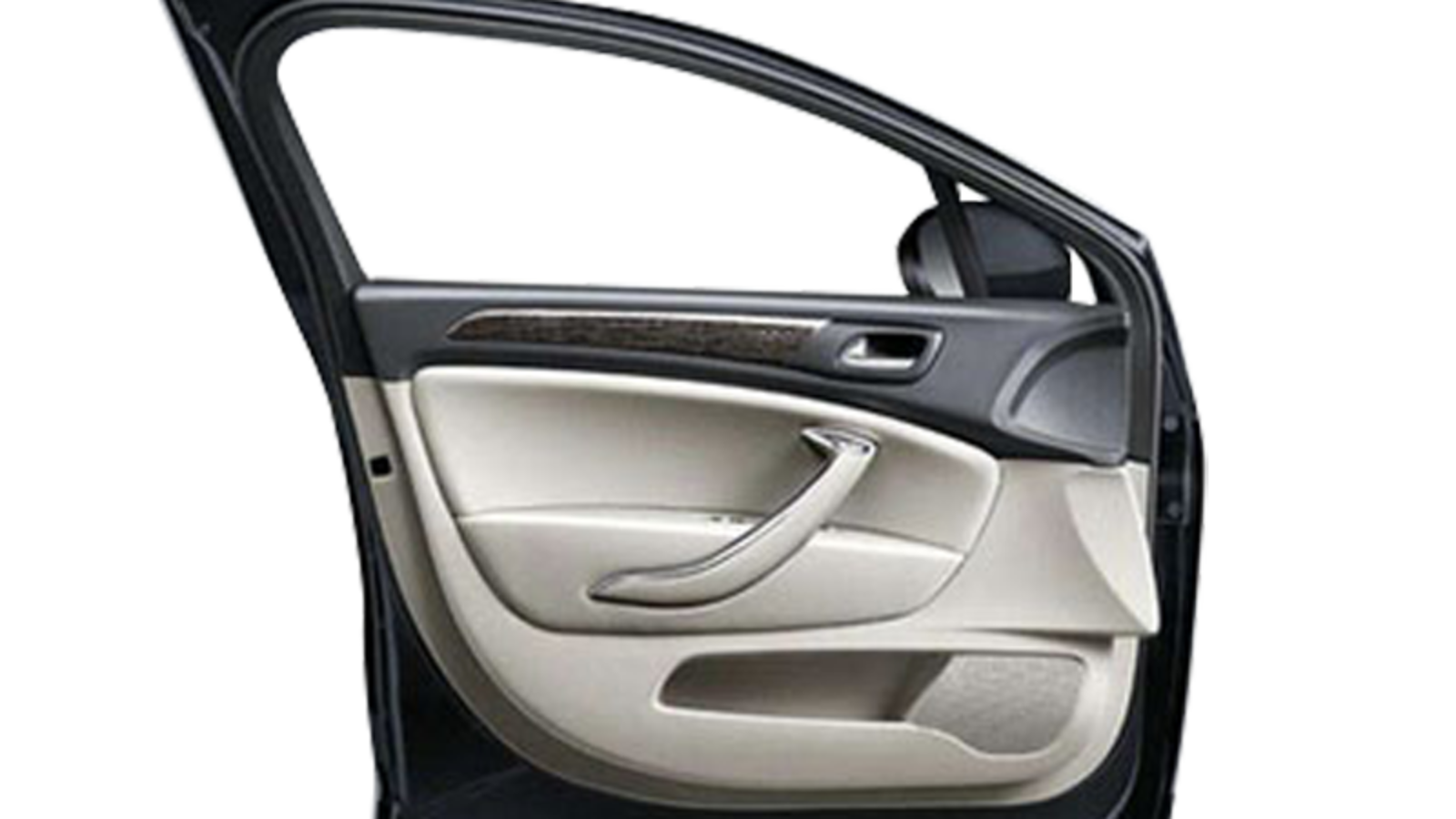
In the fields of home appliance housings, automotive interiors, office equipment, and consumer electronics, ABS plastic has long been one of the most widely used engineering plastics.
However, as market demands for material performance, cost control, and processing stability continue to rise, an increasing number of modified plastic manufacturers have begun adding talc to ABS systems.
Many people believe that adding talc to ABS is merely for the purpose of “reducing costs,” but this is not actually the case. What is truly driving change in the industry is talc’s ability to comprehensively optimize performance in ABS modification.
So, why are more and more manufacturers choosing talc for ABS modification? What is the underlying technical rationale?
I. What are the inherent shortcomings of ABS material?
ABS offers excellent impact resistance, surface gloss, and processing flowability, making it widely used in:
Refrigerator, air conditioner, and washing machine housings
Structural components for small appliances
Automotive interior parts
Office equipment housings
Injection-molded electronic products
However, ABS also has several typical issues:
Insufficient rigidity, leading to deformation in large-sized parts
Limited heat deflection temperature
High molding shrinkage
Relatively high material costs
Prone to warping after injection molding
Especially in the current environment of fluctuating raw material prices and continuous price pressure from end customers, the ABS modification industry increasingly needs a solution that can both stabilize performance and optimize costs.
And talc powder happens to meet this need.
II. The Core Role of Talc in ABS Modification
1. Enhancing Rigidity to Make ABS Products More “Stiff”
Although ABS has good toughness, its rigidity is generally average.
Talc has a natural flake-like structure. When added to the ABS system, it forms a microscopic support structure that restricts polymer chain movement, thereby improving the material’s flexural modulus and dimensional stability.
This is particularly important for the following products:
Large housings for home appliances
Long-dimension injection-molded parts
Thin-walled structural components
Industrial equipment housings
A key reason many home appliance manufacturers use talc to reinforce ABS is to reduce the risk of product deformation.
2. Improving Heat Resistance
ABS tends to soften in high-temperature environments.
Talc, being an inorganic mineral filler, possesses high thermal stability and can effectively increase the heat deflection temperature (HDT) of ABS.
This is particularly critical in high-temperature applications such as automotive interiors and air conditioning components.
Especially with the rapid development of new energy vehicles, which place increasingly higher demands on the heat resistance of plastic parts, the application of talc-reinforced ABS continues to grow.
3. Improving Dimensional Stability and Reducing Warpage Issues
During ABS injection molding, many manufacturers encounter issues such as warpage, shrinkage, dimensional instability, and excessive assembly tolerances.
The flake-like crystal structure of talc effectively reduces the shrinkage rate of ABS material and improves dimensional stability.
For precision assemblies, this benefit is even more important than mere cost reduction.
4. Reducing Overall Material Costs
Of course, talc offers another practical advantage: reducing the cost of ABS modification.
ABS is a relatively expensive resin, whereas talc, as an inorganic mineral material, can partially replace the resin, thereby lowering the overall formulation cost.
For example:
10%–15% addition: Performance-enhancing focus
20%–30% addition: Balance between performance and cost
Higher loading ratios: Cost-reduction-oriented solutions
However, ABS has high requirements for dispersion and surface finish, so the particle size, whiteness, purity, and surface treatment capabilities of talc are critical.
If talc quality is inconsistent, it may lead to: a hazy surface, reduced gloss, black specks or impurities, and decreased impact strength.
Therefore, high-end ABS modification is not simply a matter of “adding powder,” but rather involves precise control of the filler system.
III. Why is talc becoming increasingly popular among ABS modification manufacturers?
Essentially, this is because the industry is shifting from “pure cost reduction” to “comprehensive performance optimization.”
Today, many ABS customers are concerned with more than just price; they are focused on:
Whether structural strength can be enhanced
Whether warpage can be reduced
Whether heat resistance can be improved
Whether injection molding processes can be stabilized
Whether cost competitiveness can be maintained
And talc powder is precisely capable of meeting all these requirements simultaneously.
Consequently, in sectors such as home appliances, automotive, and electronics, “talc-reinforced ABS” is becoming an increasingly mature and mainstream modification solution.
Add a Comment