
With the rapid growth of disposable food packaging, thermoformed containers (such as PP and PS trays) require materials that balance cost efficiency, stiffness, appearance, and safety.
This raises a key industry question:
What is the best filler for thermoformed food containers?
1. Common Fillers for Thermoformed Containers
Calcium Carbonate (CaCO₃)
The most widely used filler:
- Low cost and abundant supply
- Improves stiffness
- Reduces shrinkage
Limitations:
- Inconsistent whiteness
- Risk of powder migration (blooming)
- Reduced toughness at high loading
Talc Powder
Increasingly used in higher-end applications:
- Higher stiffness due to plate-like structure
- Better heat resistance
- Improved dimensional stability
However, talc is relatively more expensive and requires better dispersion technology.
Functional Composite Fillers / Reinforced Masterbatch (Industry Trend)
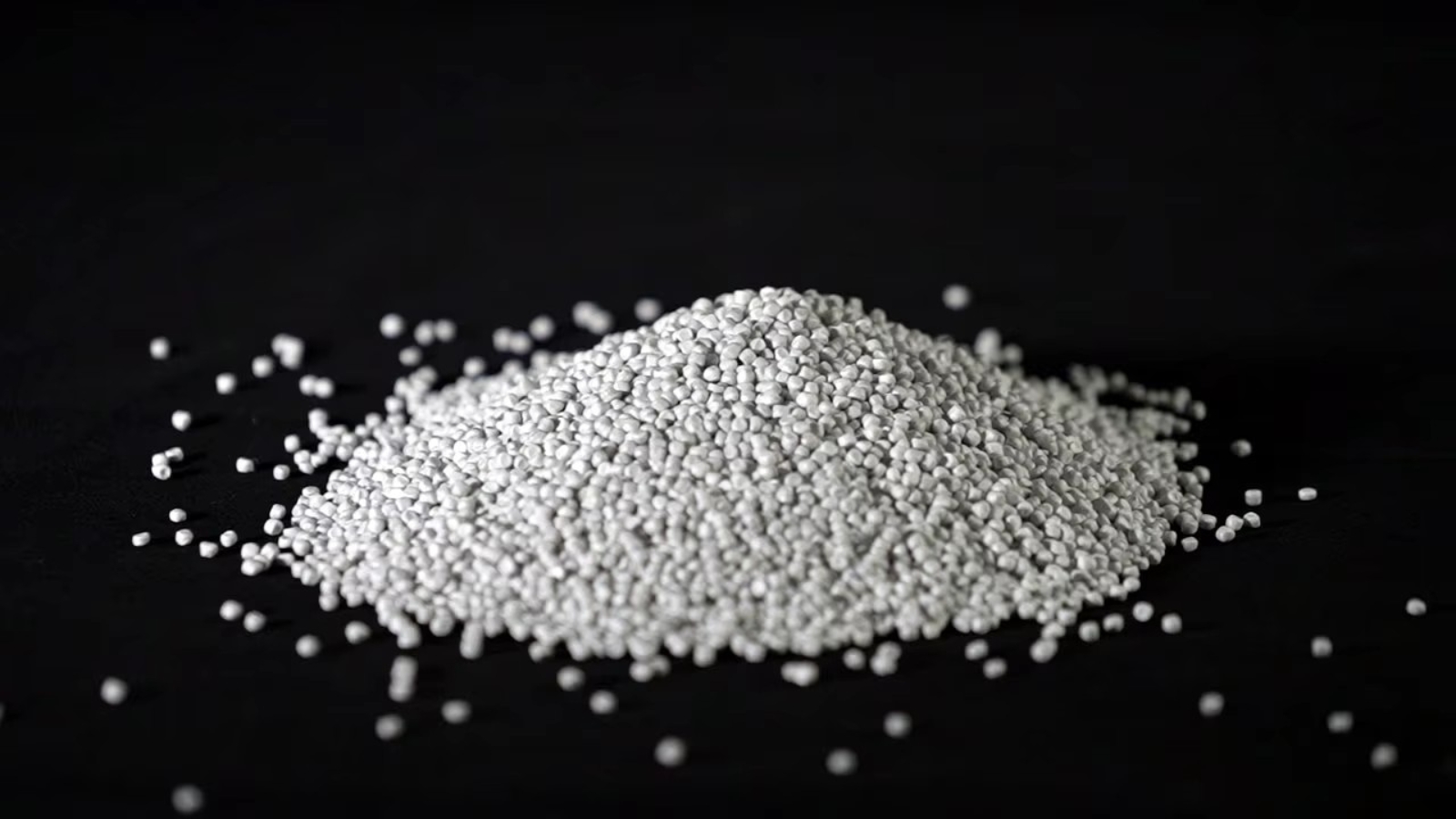
The industry is shifting toward functional masterbatches, where fillers are pre-dispersed and modified:
- More stable processing
- Better dispersion
- Improved overall performance
2. Key Performance Requirements
A high-quality filler system must meet:
- High whiteness → better product appearance
- No blooming → avoids surface defects
- Excellent dispersion → prevents black spots and uneven thickness
- Easy plasticization → improves processing efficiency
- High stiffness → ensures structural integrity
- Low odor → critical for food packaging
3. Industry Upgrade: Xufeng Reinforced Masterbatch
To address traditional filler limitations,
Quanzhou Xufeng Powder Raw Material Co., Ltd. has developed a new reinforced masterbatch for thermoformed food containers with the following advantages:
High Whiteness
Premium mineral selection and optimized formulation improve visual quality.
No Blooming
Surface treatment technology prevents powder migration and ensures long-term stability.
Excellent Dispersion
Pre-dispersed granules:
- Reduce black spots
- Improve surface smoothness
- Enhance product consistency
Easy Plasticization
Optimized rheology:
- Lower processing torque
- Higher forming efficiency
- Compatible with various machines
Enhanced Stiffness
Maintains structural strength while reducing resin usage.
Low Odor
Strict raw material selection and processing control minimize odor, suitable for food-contact applications.
4. Key Takeaway
The answer to
“What filler should be used for thermoformed food containers?”
is evolving:From single calcium carbonate filling → to functional reinforced masterbatch systems
This reflects a shift from cost-only solutions to cost + quality + stability optimization.
5. Conclusion
In today’s competitive food packaging market, material selection is a key differentiator.
If you are looking for:
- High-whiteness solutions
- Non-blooming filler systems
- Upgraded alternatives to traditional calcium carbonate
Then reinforced masterbatch solutions are worth prioritizing.
For formulation support, sample testing, or application consultation, you can collaborate with Quanzhou Xufeng Powder Raw Material Co., Ltd. for tailored technical solutions.
Add a Comment