Trusted by global manufacturers for high-performance talc and calcium carbonate. Consistent quality, fast delivery, free samples.
Talc Powder Enhances Film Stiffness and Anti-Blocking
🧑💼 Customer Background
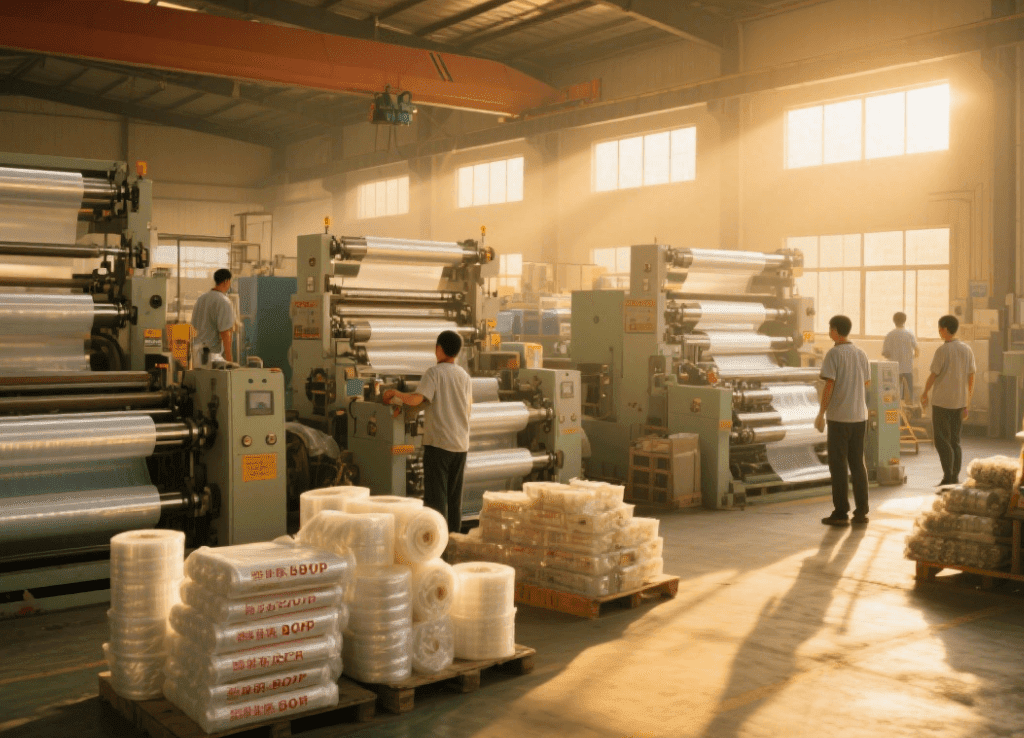
This plastic film manufacturer based in Southern China operates 8 high-speed blown and cast film lines with a daily output of 120 tons. Their product portfolio includes multilayer BOPP films, PE eco-packaging films, and heat-seal films — used widely in food packaging, courier bags, and industrial wrapping.
Facing market demands for lighter, stronger, and more processable films, the technical team set out to improve stiffness, reduce blocking, and optimize processing without increasing costs.
❗ Challenges Faced
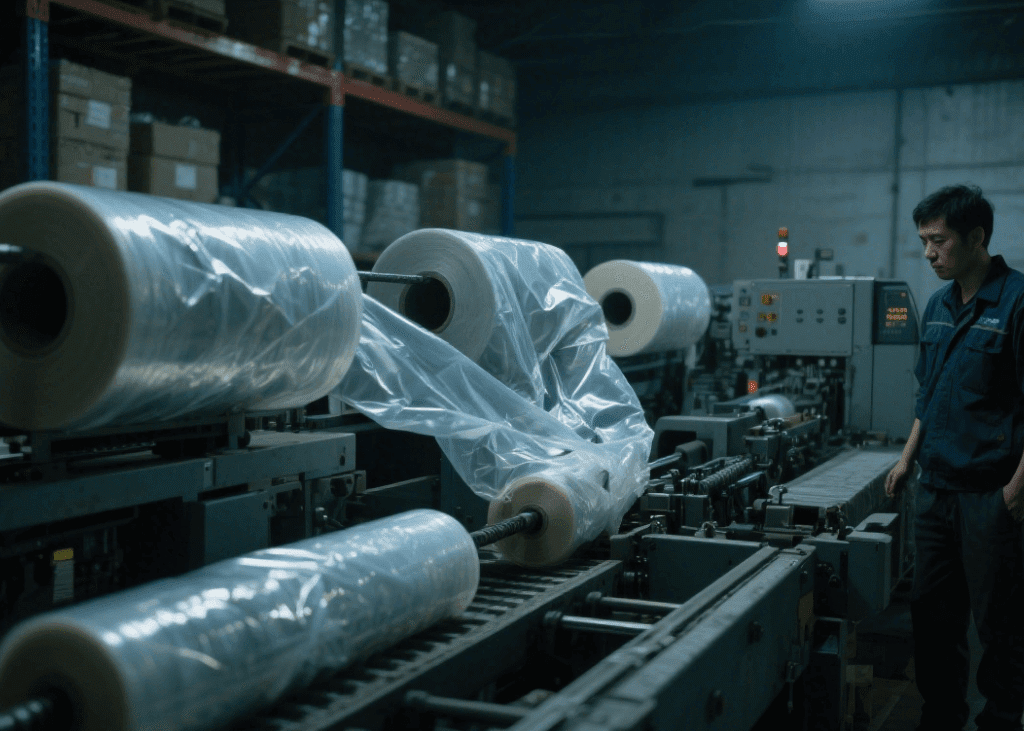
Previously, the company relied on copolymers and slip agents to maintain film performance. However, they encountered:
Poor stiffness: Films wrinkled or deformed during shipping, affecting final packaging quality
Severe blocking: High static and friction between film layers caused interruptions in automated packaging lines
High and unstable costs: Increasing reliance on premium additives strained budget control
Narrow extrusion window: Processing was sensitive and prone to defects like gels and bubbles
They had tried talc fillers before, but poor particle control led to hazy films and weaker tensile properties, resulting in failed trials.
🛠️ Xufeng's Solution
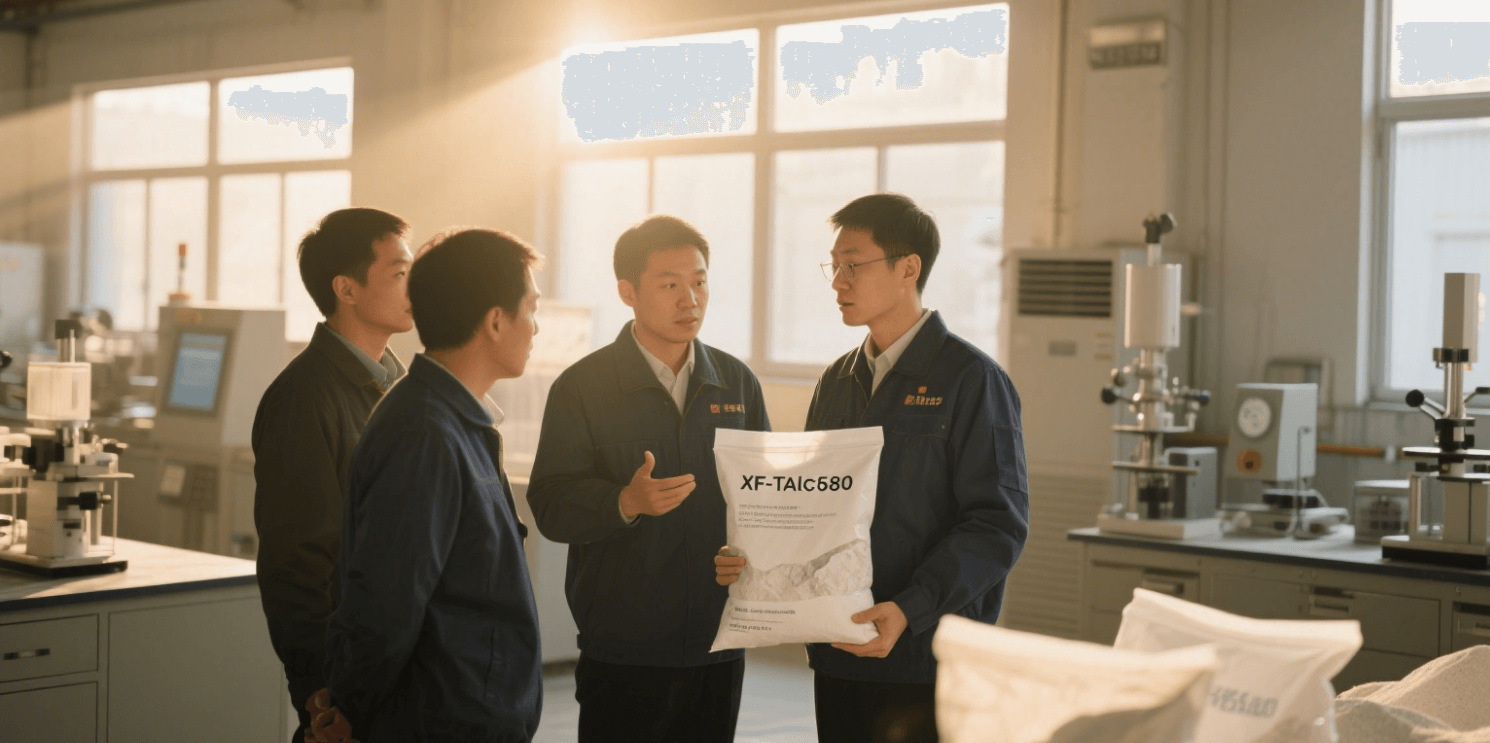
After reviewing the film structure and process conditions, Xufeng recommended BHS-1851 & XF-580, a high-purity talc powder engineered for film applications, featuring:
D90 ~5μm particle size, narrow distribution to maintain clarity and enhance mechanical strength
Platelet-shaped morphology for improved stiffness and tear resistance
Surface-modified with silane coating, ensuring high dispersion in PE/PP matrices and preventing agglomeration
Very low moisture absorption (≤0.3%), stabilizing extrusion and reducing bubble formation
We proposed adding 2.5% BHS-1851 to the PE base layer, along with adjusting extrusion temperature (+10°C) and draw ratios for enhanced melt flow and line stability.
📊 Results After Implementation
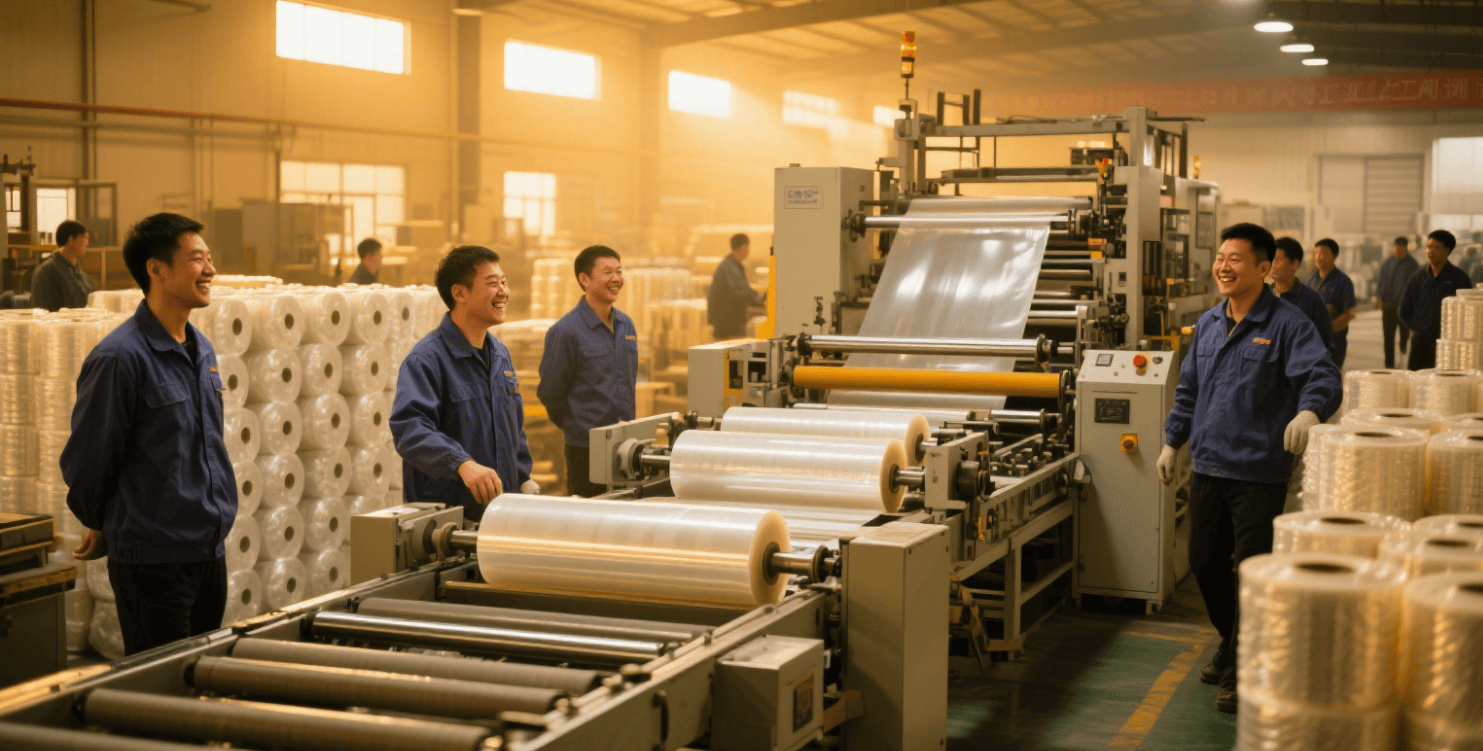
After 3 weeks of industrial production, the client achieved measurable improvements:
✅ Film stiffness increased by ~28% in both MD and TD, reducing wrinkling during transport and stacking
✅ Blocking rate dropped by over 60%, enabling longer continuous runs on auto-packaging lines
✅ Film breakage rate during stretching fell by 22%, with better thickness consistency
✅ Unit material cost reduced by ~7%, with over 50% reduction in slip agent usage
Customer Testimonial
“We were hesitant at first, thinking powder fillers might compromise film clarity. But HS-1851 is extremely well-controlled — no visible change in appearance. What really impressed us was the blocking issue being resolved so clearly. Production is smoother, and we’re planning to expand use to other film grades soon.”
OURresults
After 3 weeks of industrial production, the client achieved measurable improvements:
✅ Film stiffness increased by ~28% in both MD and TD, reducing wrinkling during transport and stacking
✅ Blocking rate dropped by over 60%, enabling longer continuous runs on auto-packaging lines
✅ Film breakage rate during stretching fell by 22%, with better thickness consistency
✅ Unit material cost reduced by ~7%, with over 50% reduction in slip agent usage